Foundation Protection in Wildwood: Where Downspouts Should Discharge
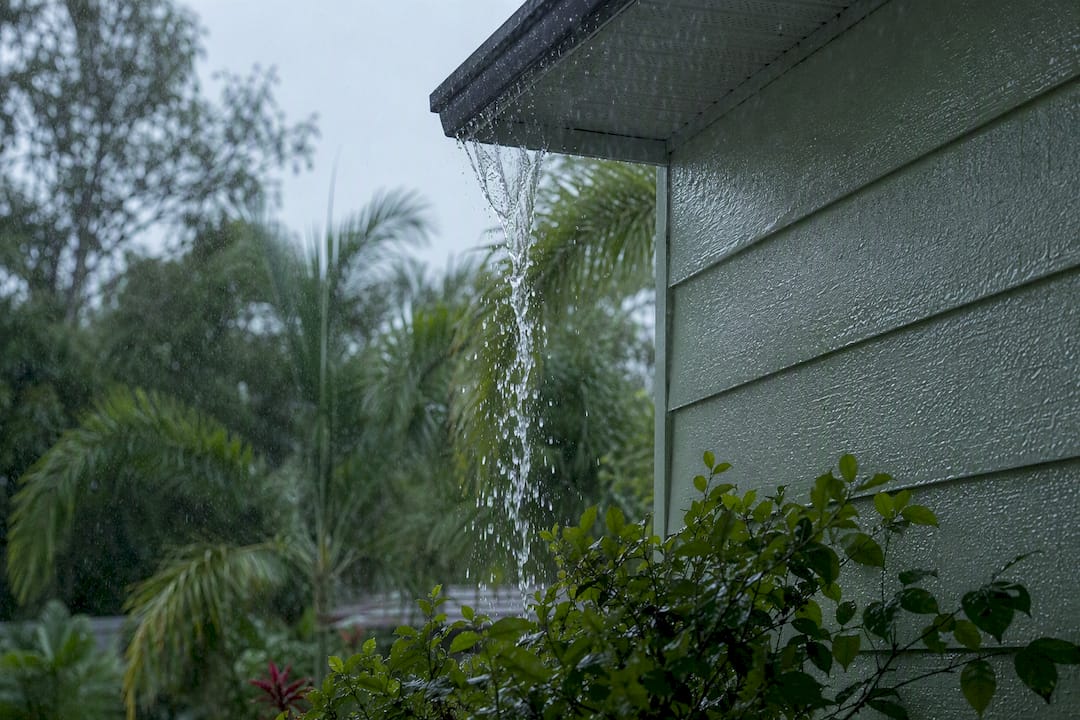
If you have watched a Florida thunderstorm roll across Wildwood in July, you already know the problem. Rain does not always fall gently here. It can come hard, fast, and all at once, and a roof sheds a lot more water than most people realize until they see it pouring off the eaves. The gutter may catch that water, but the downspout decides where it goes next. That final destination matters more than many homeowners think.
A gutter system can be perfectly installed and still cause trouble if the discharge point is wrong. I have seen homes with decent gutters and badly chosen downspout exits where the real issue was not collection at the roofline, it was the water ending up right where it should not. In a place like Wildwood, where heavy summer rain and storm season put every drainage detail to the test, the right discharge path is part of foundation protection, not an afterthought.
The short version is simple. Downspouts should discharge where roof runoff can move away from the house in a controlled way, without collecting at the foundation, without backing up into the gutter system, and without sending leaves, pine needles, and yard debris toward drains that can clog. The details, though, depend on the lot, the roof, the landscaping, and the condition of the gutters themselves.
Why the discharge point matters so much in Central Florida
Florida homes deal with a mix of weather conditions that makes water management more demanding than it looks on paper. The summer rainy season brings repeated soaking. Tropical systems can stack rain on top of already wet ground. Humidity slows drying. And if the gutter or downspout is carrying organic debris, the whole system loses capacity right when you need it most.
That is one reason storm prep guidance in Florida puts so much emphasis on clearing gutters and storm drains. Needles, leaves, and roof debris can choke off the route water is supposed to follow. Once that happens, runoff looks for the easiest path, which is often straight down next to the slab or crawlspace perimeter. Even a good downspout location becomes a bad one if the outlet is blocked by packed oak leaves or a mat of pine needles.

That local debris load is not a minor issue. In this part of the state, live oak leaves, acorns, and pine needles are part of normal life. They collect on roofs, settle in valleys, wash into gutters, and build up where downspouts empty. UF/IFAS guidance also points out a second concern that homeowners often miss: when that debris washes into the stormwater system, it does not just disappear. Organic material can move into waterways, which is why keeping leaf litter and yard waste out of drains matters.
So when someone asks where a downspout should discharge in Wildwood, I think about more than one thing at once. I think about the house, the grade, the storm load, the debris load, and what happens after the water leaves the elbow.
The basic rule: collect high, discharge smart, keep water moving
At the roof edge, gutters gather runoff. At the downspout, the goal changes. Now the job is to release water in a way that does not let it sit at the home’s perimeter.
That means a good discharge point usually has three qualities. First, it is not dumping water right at the base of the house. Second, it is not sending water into an area where it ponds or circles back. Third, it remains functional during the months when Florida storms expose every weak point in drainage.
Those three principles sound obvious, but they can be missed in real life. A downspout that empties onto a flat bed of mulch can look fine in dry weather. During a hard storm, that same spot may turn into a splash zone, wash out the mulch, trap leaves, and hold water near the wall. Another outlet may send water toward a curbside path or yard swale that works beautifully, until a season of neglected gutter cleaning leaves the elbow packed with debris and the flow spills out halfway up the run.
The discharge location and the maintenance plan are tied together. You cannot really separate them.
Why “away from the house” is only the starting point
Most homeowners have heard that downspouts should move water away from the foundation. That is true, but it is not precise enough to solve field conditions.
“Away” is not just distance. It is direction, slope, and surface. If the outlet sends water six feet from the wall but onto a low, compacted area that pitches back toward the home, the water still ends up where you do not want it. If it discharges onto a surface that erodes easily, the path can deepen over time and create its own drainage problem. If it points into a landscaped bed loaded with leaf litter, the outlet can become a small dam after one storm.
I usually tell people to think in terms of water behavior instead of hardware. When the storm hits, where will this water travel? Will it spread and drain, or will it splash, scour, and settle? Can the discharge area stay open when oak leaves are dropping and pine needles are blowing? Does the route still make sense during a tropical downpour, not just during a ten minute shower?
That way of thinking helps whether you are dealing with gutter repair Wildwood FL, planning a full gutter replacement Gainesville FL, or comparing seamless gutters Ocala FL installers. The house changes, but gutter options in Central Florida the water still follows gravity.
Common discharge choices, and how they succeed or fail
A downspout usually ends in one of a few practical ways. It may release onto grade at the surface. It may feed a splash area designed to slow erosion. It may connect into an approved drainage path on the property. Or it may discharge toward a stormwater route that must remain free of yard debris.
Each of those can work. Each can also fail.
Surface discharge is the simplest and often the easiest to inspect. You can see immediately whether water is flowing, spilling, or backing up. The downside is that surface discharge is more exposed to washout, mulch movement, mowing damage, and clogging from leaves around the outlet.
A controlled splash area can help, especially where concentrated flow would otherwise dig a trench. But if that area becomes buried in organic buildup, it starts acting like a plug.
Tying runoff into a property drainage path can be effective when the site has a clear place for stormwater to go. The caution is that the whole path has to stay open. A discharge point is only as good as the route downstream from it.
What never works well for long is sending roof runoff into a spot that already struggles with standing water. That may not show up in March. It usually shows up in August.
Gutters and downspouts are one system, not separate decisions
Homeowners often ask about discharge after they notice overflow, staining, or wet ground near the house. Sometimes the outlet is the problem. Sometimes the actual issue started upstream with the gutter size, shape, or material.
That is where conversations about gutter sizes for Florida homes become useful. If a home has roof sections that shed a lot of water quickly, an undersized system has very little margin for debris or storm intensity. The downspout location can be reasonable and still get overwhelmed if the volume arriving there is too much for the rest of the setup.
The same goes for profile and material choices. K-style gutters Lady Lake FL are common because they can handle runoff efficiently while fitting the look many homeowners want. Aluminum gutters Central Florida are popular for practical reasons, especially in humid, storm-prone areas where corrosion resistance matters. The Florida code framework also requires gutters and leaders on exterior buildings to be made of metal or approved plastic and securely fastened with corrosion-resistant fasteners. That might sound like a technical footnote, but in real weather it matters. A downspout cannot discharge properly if the system above it is pulling loose, sagging, or separating at the seams.
This is one reason seamless gutters Ocala FL keep coming up in homeowner conversations. Fewer joints can mean fewer places for leaks and debris snags. But even a seamless run still depends on smart downspout placement and a discharge area that stays open.
Pine needles, oak leaves, and the Florida clog pattern
In Wildwood and nearby towns, clogging is often less about dramatic branch falls and more about the steady buildup of ordinary debris. Pine needles drift in and knit together. Oak leaves flatten, turn dark, and mat down. Acorns settle in pockets and elbows. By the time a summer storm arrives, the gutter still looks half open from the ground, yet the water behavior says otherwise.
That is why gutter guards for pine needles Florida deserve an honest, not magical, conversation. Guards can help reduce the amount of debris entering the system, but they do not eliminate maintenance. Fine organic material still accumulates on top, around edges, or at the outlet points depending on the guard style and surrounding trees. Homeowners sometimes assume a guarded system can be ignored for years. In Florida, that is usually where disappointment begins.
Regular gutter cleaning Fruitland Park FL matters not just for appearance but for discharge performance. UF/IFAS maintenance guidance for stormwater systems specifically notes the need to clean gutters and downspouts and remove organic buildup, especially in summer. That timing makes sense. Summer is exactly when clogged systems get exposed.
One practical habit helps more than people expect: pay attention to where the debris goes after cleaning. Leaves and pine needles should be managed on site in a sensible way, such as mulch where appropriate, rather than allowed to wash into storm drains. That keeps both your own drainage and the broader stormwater system working better.
What a bad discharge point looks like during a storm
You do not always need a contractor to tell you the discharge point is wrong. Sometimes the house will show you.
Here are five signs worth taking seriously:
- Water consistently splashes or ponds near the base of the wall during rain.
- The discharge area erodes, trenches, or throws mulch and soil out of place.
- Gutters overflow even though the run itself appears intact, suggesting blockage downstream or poor flow at the outlet.
- Debris gathers at the downspout exit after every storm, especially pine needles and matted leaves.
- The same corner of the house stays wet longer than the rest of the perimeter.
Those clues do not all point to the same fix, but they do point to the same principle: the runoff is not being carried and released cleanly.
Storm-ready thinking beats last-minute patching
A lot of homeowners only notice drainage weak spots when a named storm is on the map. By then, the work becomes reactive. Better results usually come from looking at the whole system before storm season ramps up.
Storm ready gutters Florida are not just about stronger hangers or cleaner lines along the fascia. They are about flow capacity, secure fastening, clean downspouts, and discharge points that do not fail when the rain rate rises. Florida building requirements for sizing and discharge are there for a reason. Roof drainage is not ornamental. It is part of how the house handles weather.
I have found that some of the most expensive gutter problems start as modest discharge mistakes. A short downspout extension gets knocked out of alignment. A planting bed is reworked and raises the grade around the outlet. A clogged elbow slows flow, and the overflow begins to soak the same section of wall and soil again and again. No single storm seems catastrophic. The pattern is.
That is why I like to see discharge areas checked after landscaping changes, after roof work, and after any gutter repair Wildwood FL project. One trade can unintentionally affect another.
What to ask when hiring help
If you are hiring a gutter contractor Florida homeowners should not settle for a conversation that stops at color and price. The discharge plan deserves direct questions.
A good contractor should be willing to walk the runoff path with you, not just measure roof edges. They should be able to explain how the downspouts will discharge, what the water will do once it hits the ground or drainage route, and how the proposed setup fits Florida’s weather and code environment. They should also be realistic about maintenance. Anyone promising a system that never needs cleaning is overselling.
A few questions can sharpen the conversation fast:
- Where will each downspout discharge, and why is that location appropriate for this lot?
- How does the gutter size fit the roof area and our local rain patterns?
- What debris issues do you expect here, based on nearby trees and roof layout?
- How should this system be maintained through summer and storm season?
- If we add guards, what maintenance will still be necessary?
Those are practical questions, not technical traps. A competent installer should answer them clearly.
Repair or replacement, and when discharge should drive the decision
Not every drainage problem means the whole system needs to go. Sometimes gutter repair Wildwood FL is enough. A loose downspout, a poorly pitched section, a crushed extension, or a clogged outlet can all produce foundation-side water without requiring full replacement.
Other times, repair becomes a string of small fixes that never address the bigger mismatch. If the gutter profile is undersized, the downspout count is inadequate, or the discharge points were poorly chosen from the start, patchwork can only take you so far. That is when homeowners start discussing gutter replacement Gainesville FL or similar full-system work in nearby markets.
The smart decision often comes from pattern recognition. If one corner keeps failing despite cleaning, if overflow returns every wet season, or if the discharge routes no longer suit the property layout, replacement may offer the cleaner long-term answer. Not because new gutters are automatically better, but because a coherent design usually beats accumulated improvisation.
The overlooked role of maintenance at the outlet
Homeowners usually think about cleaning the troughs, but the outlet area is where many Florida systems quietly fail. Debris can pack at the transition from gutter to downspout, inside the elbow, or right where water exits onto the ground. Each of those choke points changes where the water ends up.
A useful habit is to inspect during actual rain when possible. Not from the attic window if lightning is nearby, of course, but during an ordinary shower you can learn a lot. Watch whether the downspout is flowing steadily. Watch whether water shoots out cleanly or trickles around a blockage. Watch the ground for pooling, debris mats, and splashback.
That kind of observation tells you more than a dry-day glance from the driveway. It also helps explain why some homeowners with decent aluminum gutters Central Florida still end up with wet perimeters. The material may be fine. The issue may be what is happening at the final two feet.
The best discharge point is the one that still works in August
If I had to reduce the whole topic to one practical standard, it would be this: the right downspout discharge location is the one that still performs under Florida conditions when the system is carrying heavy runoff and dealing with organic debris at the same time.
That means thinking beyond neat appearance on installation day. It means planning for pine needles, oak leaves, and summer buildup. It means keeping yard debris out of drains. It means recognizing that code-level sizing and secure fastening are part of water management, not paperwork. And it means understanding that a downspout should not simply end somewhere convenient. It should end somewhere purposeful.
For homeowners in Wildwood, that usually leads back to a few plain truths. Water needs a clear path. The base of the house should not be the storage area for roof runoff. Debris control matters as much as metal and fasteners. And when you are evaluating gutters, whether you are looking at K-style gutters Lady Lake FL, seamless gutters Ocala FL, or basic maintenance after gutter cleaning Fruitland Park FL, the discharge plan is where foundation protection gets real.
A gutter catches the rain. A downspout protects the house only if it sends that rain to the right place.